

The short answer
Micro influencers, meaning creators with roughly 10,000 to 100,000 followers, are the better default for a consumer brand buying conversions, because they combine higher engagement with lower cost per interaction.
Read the full answer
House of Marketers' 2026 tier analysis puts micro engagement at 3% to 6% against 1% to 3% for macro creators, and cost per engagement at about $0.20 for micro against $0.33 for macro, so a brand pays roughly 65% more per interaction for the larger audience.
The market has already moved: nano and micro creators now take 49.9% of US creator spend, up from under a fifth a few years earlier, according to EMARKETER's February 2026 forecast.
Macro and mega creators still win on two jobs that smaller creators cannot do, which are reaching a large audience inside a fixed window and lending recognisable credibility to a new category.
The cost nobody prices is operational, since twenty micro partnerships is twenty contracts, briefs and shipments for the same reach one macro deal delivers in a single negotiation.
Both bands are wide, and they barely overlap: a strong macro account roughly matches a weak micro one. The tier that wins on this measure is not the tier that wins on reach, which is why the choice is a job-by-job decision rather than a ranking.
Source: House of Marketers, micro vs macro influencer ROI analysis, 2026The micro versus macro question usually gets answered with engagement rates, and engagement rates are the least decision-relevant number in the comparison. Small creators win on engagement in every published dataset. They lose on reach, on production, and on how much of your team’s week the campaign consumes.
Both parts of that are measurable. House of Marketers’ 2026 tier analysis puts average engagement at 3% to 6% for micro creators against 1% to 3% for macro. Meanwhile EMARKETER’s February 2026 forecast has US creator revenue reaching $21.10 billion this year, with nano and micro creators taking 49.9% of it.
What counts as a micro influencer and what counts as a macro one?
Micro means roughly 10,000 to 100,000 followers, and macro means roughly 500,000 to a million. The full set of bands in common use, per the tier definitions the 2026 benchmark reports share, runs nano at 1,000 to 10,000, micro at 10,000 to 100,000, mid-tier at 100,000 to 500,000, macro at 500,000 to a million, and mega above a million.
No standards body sets those boundaries, and different platforms and agencies shift them by a factor of two. What makes the bands worth using anyway is that the way a deal works changes at the edges.
Below about ten thousand followers you are usually dealing with someone who has no manager, replies to DMs and will take product. Above about half a million there is an agent, a rate card and a contract with usage terms already drafted.
The band also predicts what you get for your money in ways the follower number alone does not. A micro creator in a specific niche has an audience that self-selected for that niche. A mega account’s audience selected for the personality, which makes it broad and makes any single product recommendation a smaller share of what that audience is there for.
One note on measurement before comparing anything. Follower count and engagement rate are both easy to inflate, and the cheapest audit is whether comment volume is proportionate to like volume and whether the comments say anything specific.
The denominator matters as much as the inflation does, and what counts as a good engagement rate for influencers sets out which published benchmark measures which accounts. That catches most accounts whose numbers will not survive a campaign.
Do micro influencers actually get better engagement?
Micro creators get better engagement than macro creators, and the size of the gap is less settled than the direction. According to House of Marketers’ 2026 analysis, micro engagement runs 3% to 6%, higher in specialised niches, against 1% to 3% for macro. The same study has micro campaigns returning 5x to 8x where macro campaigns land at 3x to 5x.
Treat any single set of tier averages as approximate, including that one. Published 2026 compilations disagree with each other by more than the gap between the tiers they are measuring, because they use different tier boundaries, different date ranges and different definitions of engagement, with some counting saves and shares and others only likes and comments.
The honest version is that the ordering is reliable and the magnitudes are not. Anyone quoting you a tier average to two decimal places is quoting one compilation’s methodology, and a competing one will disagree by more than the gap they are asking you to act on.
The mechanism behind the decline is worth understanding, because it tells you when the pattern will not hold. Smaller audiences are more topically concentrated and the creator still replies to comments, which raises the rate. An account that grew large inside one narrow niche and kept answering its audience can hold a micro-level engagement rate at macro scale, and those accounts are the most underpriced inventory in the category.
Which tier costs less per unit of attention?
Micro creators cost less per interaction. House of Marketers’ 2026 analysis puts cost per engagement at around $0.20 for micro creators against $0.33 for macro, so a brand buying attention through a larger account pays roughly 65% more for each one.
Cost per engagement is a useful screening metric and a poor decision metric, because an engagement is not a result. What you actually want is cost per acquired customer, and the tier that wins on engagement cost can lose on that if its audience does not match your buyer. Rate cards by tier are covered in more detail in how much influencers cost per post.
Fit beats tier on this measure often enough that it is worth checking before the tier decision. A macro creator whose audience is 80% your target demographic can deliver cheaper customers than a micro creator whose audience overlaps by 20%, even at double the cost per engagement. Ask for audience demographics before you ask for a rate.
The other adjustment most brands forget is usage rights. A post you can only leave on the creator’s feed is worth much less than the same post you can run as an ad, and the licensing premium is charged as a percentage of the base fee, so it scales with the tier.
Two quotes that look comparable on cost per engagement can differ substantially once you price the rights you need.
Where is influencer budget actually going in 2026?
Influencer budget is going down-market, and quickly. According to EMARKETER’s February 2026 forecast, nano and micro creators take 49.9% of US creator marketing spend, up from less than a fifth a few years earlier, against a total US creator revenue pool of $21.10 billion.
Intent data points the same way. Influencer Marketing Hub’s Benchmark Report 2026, which surveyed more than 600 respondents, found 51% of brands planning to grow their nano roster against roughly 10% planning to cut it, and puts 73% of brands now favouring micro creators over celebrity and macro partnerships.
A reallocation that large has a price consequence worth anticipating. When half the market’s spend moves into a tier, that tier’s rates stop being a bargain, and the arbitrage that made micro creators cheap per engagement in 2022 is partly closed.
The specific accounts that remain underpriced are the ones without managers and without a rate card, which is also the part of the market that costs the most to work with.
The honest reading is that the shift down-market is a response to attribution rather than to engagement. Brands moved budget toward creators whose results could be tied to a code or a link, and small creators were easier to run that experiment on. Measuring it properly is its own problem, covered in how to measure influencer marketing ROI.
What does running twenty micro creators actually cost you?
Twenty micro partnerships costs you twenty of everything, and none of it appears on a rate card. Twenty contracts, twenty briefs, twenty product shipments, twenty rounds of revisions and twenty follow-ups about a post that went live without the disclosure tag.
That overhead is the strongest argument for larger creators and the reason agency retainers exist. A single macro deal is one negotiation, one legal review and one point of contact for the same reach, which matters when the constraint on your team is hours rather than budget. A brand with one marketer cannot run thirty creator relationships properly, and running them badly destroys the cost advantage that motivated the choice.
The overhead is also why the tier decision should follow from your operating capacity rather than from a benchmark. Three creators run properly, with a clear brief and usage rights secured before the shoot, will outperform fifteen run as an afterthought. Volume only helps if the process holds at volume.
What makes the overhead worth paying is variety. Twenty creators produce twenty different opening lines and twenty different framings of the problem. One creator produces one, however well made. If the content is going into a paid account, that variety is the point, and no single macro partnership supplies it at any price.
Which tier should you use for which job?
Match the tier to the job rather than picking a winner. Micro creators are the default for conversion work and for supplying paid creative.
Macro and mega creators earn their rates on reach inside a fixed window and on credibility in an unfamiliar category.
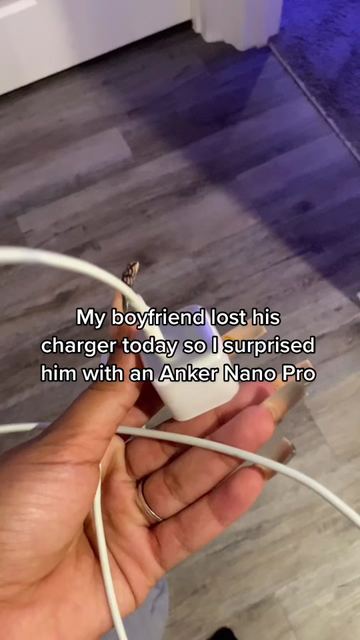
Category fit usually decides more than the tier does: across 21 creator campaigns we ran for the Anker portfolio, power stations went to outdoor, survival and tiny-house channels while chargers went to TikTok at volume, and the product decided the shortlist before the follower count did.
| Job | Tier that fits | Why |
|---|---|---|
| Conversion and performance | Nano and micro | lowest cost per engagement, audience concentrated in a niche |
| Ad creative supply | Micro, in volume | variety of angles matters more than polish |
| Launch or retail date | Macro and mega | reach arriving simultaneously behaves differently from the same reach spread out |
| New or unfamiliar category | Macro and mega | recognition substitutes for the trust the category has not built yet |
| Regulated claims | Macro | production and legal process already exist on their side |
The two macro jobs are genuinely not substitutable by volume. A product launching with retail distribution on a set date needs awareness concentrated in that week, and thirty micro posts spread across a month do not produce the same effect even at identical total reach. Recognition works similarly: a face the audience already trusts shortcuts a decision that an unknown creator has to argue for.
Most consumer brands need a mix rather than a choice, and the ratio depends on stage. Before product-market fit, spend almost everything on micro and nano, because you are buying information about which angles work. After it, a macro partnership can amplify an angle you have already proven.
Which tier produces better paid ad creative?
Micro and nano creators produce better paid creative for most brands, because paid social rewards the number of distinct angles you can test and the economics of small creators let you buy angles in bulk. Twenty starting points beats one polished asset when the account is still looking for the hook that works.
Running creator content as ads changes what you should negotiate, and it changes the value of each tier. The content needs usage rights, and running it from the creator’s own handle through Meta’s Partnership Ads format performs measurably better than running the same asset from the brand account, which is covered in influencer whitelisting and partnership ads.
The exception is when recognition is the hook. If the reason the first two seconds hold is that the viewer knows the face, a micro creator cannot replicate it, and the macro rate is buying a genuine creative advantage rather than reach. That is a narrow case and it is worth testing rather than assuming, because audiences skip familiar faces in a paid context more often than brands expect.
What decides this in practice is how many creatives your account needs per month to keep testing. If the answer is thirty, the tier question answers itself on arithmetic, and the relevant constraint is production capacity rather than follower count. How many ad creatives to test per month covers what that volume actually needs to be.
The short version
Micro creators, at roughly 10,000 to 100,000 followers, are the right default for a consumer brand buying conversions. Engagement runs 3% to 6% for micro against 1% to 3% for macro on House of Marketers’ 2026 analysis, and cost per engagement about $0.20 against $0.33 in the same study, so the larger tier costs roughly 65% more per interaction.
The market agrees and has already moved, with nano and micro creators taking 49.9% of US creator spend according to EMARKETER’s February 2026 forecast, out of a $21.10 billion pool. That also means the tier is no longer the bargain it was, and the remaining underpriced inventory is the accounts without managers, which cost the most in time.
Keep macro and mega creators for the two jobs they do uniquely well: reach concentrated inside a fixed window, and credibility in a category the audience does not know yet. And price the operational cost honestly, because twenty micro partnerships is twenty contracts and twenty shipments, and three creators run properly beats fifteen run badly.
Frequently asked
What is the difference between a micro and a macro influencer?
Follower count, and the industry uses roughly the same bands. Per the tier definitions common to the 2026 benchmark reports, nano creators sit at 1,000 to 10,000 followers, micro at 10,000 to 100,000, mid-tier at 100,000 to 500,000, macro at 500,000 to a million, and mega above a million.
The bands matter because engagement, rate cards and the way a deal gets negotiated all change at the boundaries, not because the labels are standardised anywhere official.
Do micro influencers get better engagement than macro influencers?
Yes, consistently. According to House of Marketers' 2026 analysis, micro engagement runs 3% to 6%, climbing higher in specialised niches, against 1% to 3% for macro creators.
The same study has micro campaigns returning 5x to 8x where macro campaigns land at 3x to 5x. Published tier averages vary enormously between compilations, because they use different tier boundaries, different date ranges and different definitions of engagement, so treat the ordering as reliable and any single set of figures as approximate.
Are micro influencers cheaper per result?
Per unit of attention, yes. House of Marketers' 2026 analysis puts cost per engagement at roughly $0.20 for micro creators against $0.33 for macro, which is about 65% more per interaction at the larger tier.
Cost per result is a different question, because a result is a purchase rather than a like, and that depends on whether the creator's audience matches your buyer. A cheap engagement from the wrong audience costs more than an expensive one from the right audience.
When is a macro influencer worth the higher rate?
When you need a large audience inside a fixed window, or when recognition itself is the product.
A launch date, a retail listing, a seasonal peak and a category nobody has heard of are all cases where one large creator does something twenty small ones cannot, because reach arriving simultaneously behaves differently from the same reach spread across a month.
Macro deals also come with production quality and a single point of contact, which has real value when the content has to clear legal review.
How many micro influencers equal one macro influencer?
On raw reach, roughly ten to fifty depending on the accounts, and the equivalence breaks down in practice. Twenty micro partnerships means twenty contracts, twenty briefs, twenty shipments and twenty sets of revisions, an operational cost no rate card shows.
Brands do it anyway because twenty creators produce twenty different angles, and angle variety is what makes creator content useful as paid advertising.
Which tier produces better content for paid ads?
Micro and nano creators, for most brands, because the economics let you buy volume and variety. Paid social rewards the number of distinct angles you can test, and twenty micro creators give you twenty starting points where one macro creator gives you one polished asset.
The exception is when the creator's recognisability is the reason the ad works, since a famous face in the first two seconds is a hook a small creator cannot replicate.
 Should You Hire an App Growth Consultant, an Agency, or Do It In-House?
 Why Aren't My App Installs Converting Into Trials?
 How Is ASO Different on the App Store vs Google Play?