

The short answer
Influencer marketing is worth it for a consumer brand, but not as the channel that makes this quarter's number, because its measured strength is long-term rather than immediate.
Read the full answer
Per the IPA's influencer ROI study, whose UK short-term analysis covers 59 campaigns, creator activity returned a short-term ROI index of 99 against an all-channel average of 100, while delivering the highest long-term multiplier of any channel at 3.35.
Read together, those two findings say influencer marketing pays back at about the market average in the short run and better than anything else over years, which is the opposite of how it is usually bought.
The number that should set expectations is its share of volume: per the same study, creator activity drove roughly 4.5% of short-term sales against 32% for linear TV and 13% for paid social, so it supplements a growth plan rather than carrying one.
The brands that get a return from it buy two things, reach now and licensed creative to test on paid social afterwards, and judge it over quarters rather than weeks.
Per this study, creator activity returns roughly the average of all media, slightly ahead of linear TV and well ahead of standard paid social. An average return is a reasonable thing to buy, and it is not the outsized return the category is usually sold on.
Source: IPA influencer ROI study, short-term ROI indices from 59 UK campaigns, published October 2025The question is usually asked about the channel and is really about the expectation attached to it. Influencer marketing has a measurable return, and it is a different return from the one most brands think they are buying.
Most of the published figures in this category come from vendor surveys, which measure what marketers believe. One study measures what actually happened, and it is the one worth starting from.
Is influencer marketing worth it for a consumer brand?
Influencer marketing is worth it for a consumer brand, with the caveat that its measured strength is long-term rather than immediate. Per the IPA’s influencer ROI study, published through WPP Media in October 2025, creator activity across 59 UK campaigns returned a short-term ROI index of 99 against an all-channel average of 100, and a long-term ROI index of 151.
That study is the strongest evidence in the category because of what it is built on. According to WPP Media, it covers 220 econometric studies spanning 144 brands, 36 categories, 28 markets and £133 million of creator investment, which makes it a measurement exercise rather than a survey of opinions.
The two halves of the finding pull in different directions and both matter. On short-term return, creator activity is ordinary: slightly ahead of linear TV at 97 and well ahead of standard paid social at 86, but at the average of all media. On long-term return it is the best channel measured, with a multiplier of 3.35 against 3.27 for linear TV.
So the honest answer depends entirely on your time horizon. A brand that needs revenue this month is buying a channel that scores average on exactly that, with the upside arriving on a schedule it is not measuring. A brand building a consumer brand over years is buying the best long-term multiplier in the study.
What does the evidence actually say about influencer marketing ROI?
The evidence says creator activity returns about the market average per unit of spend and compounds better than anything else over time. According to the IPA’s own summary of the study, the short-term indices across 59 UK campaigns are 99 for creators, 97 for linear TV and 86 for paid social, closely aligned with the all-channel average of 100.
Those long-term figures carry a caveat worth stating. According to the IPA, the long-term results rest on 18 UK campaigns against 59 for the short-term figures, so a multiplier of 3.35 is a strong signal rather than a settled number, and it deserves less certainty than the short-term indices do.
The widely circulated alternative figures are weaker. The familiar claim of roughly $5.78 returned per dollar spent traces back to vendor surveys of marketer self-reports rather than econometric modelling, and sources citing it do not agree with each other, which is a reason to treat it as a belief measure.
What practitioners report about their own measurement supports the caution. According to Influencer Marketing Hub’s Influencer Marketing Benchmark Report 2026, promo and discount codes are the most adopted measurement tool at 45.9%, ahead of affiliate links at 26.0%, and both undercount systematically. Our guide to measuring influencer marketing ROI covers what to use instead.
| Channel | Short-term ROI index | Long-term ROI index | Long-term multiplier | Share of short-term sales |
|---|---|---|---|---|
| All-channel average | 100 | Not reported | Not reported | Not applicable |
| Creators | 99 | 151 | 3.35 | ~4.5% |
| Linear TV | 97 | Not reported | 3.27 | ~32% |
| Standard paid social | 86 | 77 | Not reported | ~13% |
Every figure in that table comes from the IPA influencer ROI study, as published by WPP Media and by the IPA in October 2025. The short-term indices rest on 59 UK campaigns and the long-term figures on 18, so read the right-hand columns with less confidence than the left.
Why does influencer marketing so often look like a failure?
Influencer marketing looks like a failure most often because it is bought for awareness and judged on a short sales window. The mismatch is visible in the same survey data: per Influencer Marketing Hub’s 2026 benchmark report, brand awareness is the top KPI at 55.1%, while 65.9% of marketers expect payback within one month and 48.4% within two weeks.
Read those two numbers next to the IPA findings and the pattern explains itself. A channel whose strength is a long-term multiplier, bought for an upper-funnel objective, assessed on two weeks of attributed revenue, will read as a failure in most cases where it actually worked.
Attribution makes it worse rather than better. Discount codes and affiliate links only capture the people who used them, so a campaign that drove branded search, a direct visit a week later or a purchase on a desktop goes uncounted, and the shortfall lands on the channel rather than on the method.
There is a real failure mode underneath the measurement one, and it is worth separating. Campaigns with no brief, no format discipline and no licensing produce uncomparable content that cannot be reused, and that genuinely does not work. Our piece on why an influencer campaign drove no sales covers how to tell the two apart.
What is influencer marketing actually good at?
Influencer marketing is good at two things specifically: borrowing attention for a product that has none of its own, and producing creative that outperforms brand-made ads once it is licensed into paid social. Both are supported by what the measurement shows.
The borrowed-attention case is where the long-term multiplier comes from. A creator’s audience arrives with trust already established, which is why the effect persists past the campaign window and why the IPA study found creator activity ahead of every other channel it measured on long-term return.
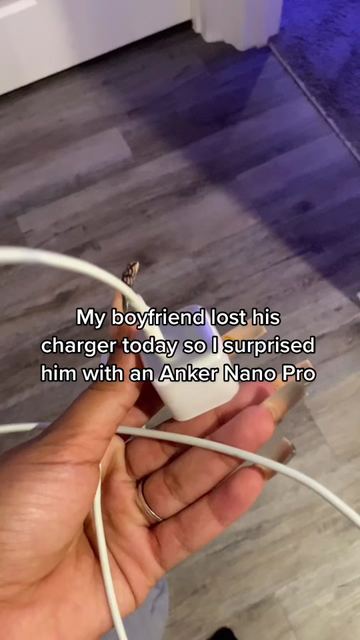
The creative-supply case is more immediate and easier to verify yourself. A creator asset that performs can be cut into paid variants and tested against your current ads within days, which turns a brand moment into a standing library. Our UGC ad and creator program work is built around that handoff, and the Anker GaNPrime campaign with 15 YouTube tech reviewers is the version of it on long-form video.
Both strengths depend on a contracting decision made before filming. Paid usage rights have to be agreed up front or the winner is an organic post you cannot run, which is the single most common way a campaign throws away its own best outcome.
How much of your sales can influencer marketing realistically carry?
Influencer marketing realistically carries a small share of near-term sales, which is the most useful number in the whole study. Per the IPA’s published figures, creator activity drove roughly 4.5% of short-term sales across 59 UK campaigns, against 32% for linear TV and 13% for paid social.
Set that against how it is often pitched. A channel contributing single-digit percentages of short-term volume cannot be the growth plan, however good its return per dollar, because efficiency and scale are different properties and only one of them pays the bills this quarter.
The practical consequence is a budgeting rule rather than a verdict. Fund influencer activity as a layer alongside paid social and whatever else drives volume, size it to what you can measure, and resist moving the whole budget into it because the ROI index looked good.
Spend intentions suggest the market is doing the opposite. Influencer Marketing Hub’s 2026 benchmark report found that 87.49% of marketers expect influencer budgets to increase in 2026 and 72.22% expect an increase of 50% or more, which is a lot of money moving into a channel most brands measure with discount codes.
When is influencer marketing not worth it?
Influencer marketing is not worth it in four situations, and recognising them early saves a quarter. When the product has no retention, when the conversion path is broken, when the budget cannot cover enough creators to read a result, and when nobody internally owns licensing.
A product people do not come back to makes the channel actively expensive. Creator content is good at generating trial, and trial into a product that disappoints converts attention into a public record of disappointment, which is worse than no campaign.
A broken conversion path wastes the same attention more quietly. If the landing experience, the pricing or the checkout loses people, then more qualified attention produces more abandonment, and the campaign gets blamed for a problem it had no way to touch.
Budget size is the least discussed of the four. One or two creators produce a story rather than a read, and a brand that can only fund a single post should spend that money on a paid test instead. Our comparison of UGC and influencer marketing sets out which of the two a small budget should buy first.
What would make it worth it for your brand?
What would make influencer marketing worth it for your brand is mostly contractual, and all of it is checkable before you spend a dollar. Paid usage rights in the contract, a measurement method better than a discount code, a review horizon set in quarters, and somebody internally who owns all three.
Usage rights are the clause that turns a one-off campaign into reusable inventory. Ask for the platforms, the term and whether paid amplification is included, and ask before filming rather than after a post performs. Our breakdown of what UGC usage rights cost covers what the market charges for each term.
Measurement is where most of the available improvement sits, and the honest options are narrower than the dashboards suggest. A holdout test, a geo split or a before-and-after read on branded search will each tell you more than an attributed code, and they all need setting up before the campaign rather than after it.
The review horizon is the one to agree with whoever controls the budget, because it is the term most likely to be set by someone who was not in the planning meeting.
Per the IPA study, the channel’s advantage shows up in a long-term multiplier of 3.35, so a review at week two measures the part it is merely average at. Write the date down at the start, along with what will be measured.
The short version
Influencer marketing is worth buying, with a clear-eyed view of what it returns. Per the IPA’s influencer ROI study, which spans 220 econometric studies across 144 brands and 28 markets and reads its short-term indices off 59 UK campaigns, creator activity returned a short-term ROI index of 99 against an all-channel average of 100, and the highest long-term multiplier of any channel at 3.35.
Size it to its contribution rather than to its efficiency. Per the same study, creator activity drove about 4.5% of short-term sales against 32% for linear TV and 13% for paid social, so it is a layer in a plan rather than the plan.
Then fix the three things that decide whether you see the return. Paid usage rights agreed before filming, a measurement method better than a discount code, and a review date set in quarters. Per Influencer Marketing Hub’s 2026 benchmark report, 65.9% of marketers expect payback inside a month, and that expectation, not the channel, is what most often makes influencer marketing look like a waste of money.
Frequently asked
What is a realistic ROI for influencer marketing?
Roughly the average of your other media in the short term, and better than any of it over years.
Per the IPA's influencer ROI study, whose UK short-term analysis covers 59 campaigns, creator activity scored a short-term ROI index of 99 against an all-channel average of 100, and a long-term multiplier of 3.35, the highest measured. Treat any vendor quoting a fixed return per dollar as quoting a survey rather than an econometric result.
Is influencer marketing better than paid social?
On the study's numbers it returns more per unit of spend and delivers far less volume. Per the IPA study, creators scored 99 on short-term ROI against 86 for standard paid social, and drove about 4.5% of short-term sales against 13% for paid social across the same 59 UK campaigns.
The sensible reading is that they do different jobs and work best together, with creator content licensed into paid.
Why do so many brands say influencer marketing did not work?
Usually because it was bought on an awareness rationale and judged on a two week sales window. Per Influencer Marketing Hub's 2026 benchmark report, brand awareness is the top KPI at 55.1% while 65.9% of marketers expect payback within one month and 48.4% within two weeks.
A channel whose measured strength is a long-term multiplier will fail that test even when it worked.
How much should a consumer brand spend on influencer marketing to find out?
Enough to book three to five creators in one format and licence the output for paid testing, which is a far smaller commitment than an always-on program.
The point of a first budget is information, not reach, so the useful test is whether any of the content outperforms your current ads once it runs as a paid variant.
Does influencer marketing work for a brand nobody has heard of?
Yes, and it is one of the few channels that does, because a creator lends their audience's attention to a product with no reputation of its own. What it will not do is substitute for a product people want or a conversion path that works.
Our piece on marketing a product with no audience covers the order those pieces go in.
 Should You Hire an App Growth Consultant, an Agency, or Do It In-House?
 Why Aren't My App Installs Converting Into Trials?
 How Is ASO Different on the App Store vs Google Play?