
The short answer
Plan eight to twelve weeks for a first influencer campaign, four to eight weeks to first content live once you have a process, and two to four weeks for a single creator.
Read the full answer
Those are the published ranges for strategy, sourcing, briefing, production, approvals and go-live. Per Later's April 2026 campaign timeline, a typical campaign runs eight to twelve weeks across strategy, sourcing, briefing, production, approvals and reporting.
Per Acceleration Partners in June 2026, a brand starting a new program should expect four to eight weeks from kickoff to first content live, with creators needing product in hand two to three weeks before a post goes up.
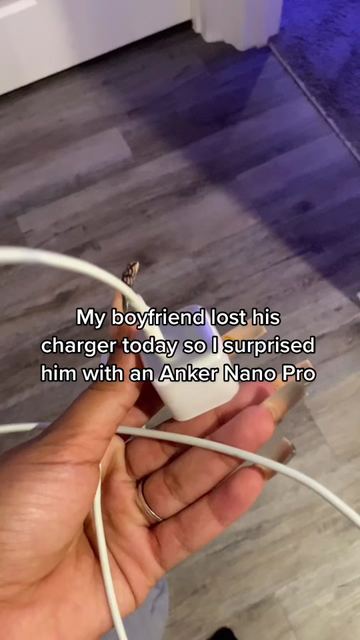
Volume compresses less than people expect: for the Anker Nano Pro launch, Impact Origins cast, briefed and shipped 100 TikTok creators in six weeks.
The mismatch to plan around is that per Influencer Marketing Hub's 2026 benchmark report, 65.9% of marketers expect payback inside one month, including 48.4% inside two weeks, which is faster than most campaigns can even reach their posting window.
Scale does not cost proportionally more time. Per these sources, one creator takes two to four weeks and a new program four to eight, while a hundred creators went live in six weeks because the stages ran in parallel rather than in sequence.
Source: Later April 2026, Acceleration Partners June 2026, Impact Origins case study for the Anker Nano ProTwo numbers decide whether an influencer campaign feels slow: when the posts go up, and when somebody expects to see money. They are rarely set by the same person, and the gap between them is where most of the frustration lives.
The timeline itself is not mysterious. Published campaign plans agree on roughly the same shape, and almost all of the variance is on the brand’s side of the table rather than the creators’.
How long does it take to run an influencer campaign?
An influencer campaign takes eight to twelve weeks end to end for a brand running one properly, and four to eight weeks from kickoff to the first content going live. According to Later’s April 2026 influencer campaign timeline, the eight to twelve week figure covers strategy and goal setting, creator sourcing and vetting, briefing, production, approvals, the go-live window and post-launch reporting.
Per that timeline, the stages run one to two weeks for strategy, one to two for sourcing and vetting, a week for briefing, one to three for content production, three to five days for approvals and revisions, a week of go-live and one to two weeks of monitoring after launch. Those stages overlap in practice, which is why the end-to-end figure and the time-to-live figure differ so much.
Per Acceleration Partners’ June 2026 account of the same question, a brand launching a new program should plan four to eight weeks from kickoff to first content live. Both sources are agency-published rather than independent research, and they arrive at compatible numbers from different starting points.
Treat the range as a function of how much already exists. A brand with no roster, no brief and five approvers sits at the top of it. A brand with a creator list, a format that worked last quarter and one decision maker sits near the bottom, and the difference is organisational rather than creative.
| Stage | Duration | Who sets the pace |
|---|---|---|
| Strategy and goal setting | 1-2 weeks | You |
| Creator sourcing and vetting | 1-2 weeks | The agency, faster with a standing roster |
| Briefing and creative alignment | 1 week | You, on claims and approvals |
| Product shipping to creators | 2-3 weeks before the post | Your logistics |
| Content production | 1-3 weeks | The creator |
| Approvals and revisions | 3-5 days per round | You |
| Go-live window | 1 week | Agreed in the contract |
| Monitoring and optimisation | 1-2 weeks after launch | The agency |
Durations in that table come from Later’s April 2026 timeline, except the shipping row, which is from Acceleration Partners in June 2026.
What takes the longest, and is it the creators?
The longest stages are brand-side, not creator-side. According to Acceleration Partners in June 2026, most of a campaign schedule goes on strategy alignment, creator research, vetting, negotiation, briefing, approvals and product shipment, and slow internal approvals with many stakeholders are among the most common causes of overrun.
Product shipping is the stage that most often sets the real date. Per that same source, creators need product in hand two to three weeks before content goes live, so the shipping decision is made a month before anyone sees a video. A campaign planned around a launch date without a shipping plan is planned around nothing.
Negotiation takes longer than brands budget for, and it varies by deal type. Per Acceleration Partners, outreach and negotiation runs three to seven days for commission-based creators and one to two weeks for hybrid arrangements, with client approval taking two to three business days at fast brands and a week or more at slow ones.
None of those stages are waiting on a creator to film. Filming is a couple of days inside a window the creator controls, and the brands that complain about creator speed are usually describing the two weeks their own legal and brand teams spent on a brief. Our guide to finding influencers for your brand covers how to keep the sourcing stage from restarting every quarter.
How long does one creator take from contract to live post?
One creator takes two to four weeks from signed contract to live post. According to Acceleration Partners in June 2026, that is the normal window once contracting is complete, and it holds whether the deal is a single sponsored post or a licensed asset you intend to run as an ad.
Inside that window the sequence is shipping, filming, review and scheduling. Per that same source, most agencies allow two rounds of edits, and a round of revisions is measured in days because it involves two calendars. Asking for a third round is the quiet way a two week job becomes a five week one.
The number changes very little with creator size. A nano creator and a creator with a million followers both take roughly the same time to ship to, film and review, which is why follower count is a poor proxy for how hard a booking is. What changes with size is the negotiation, not the production.
What does change the timeline is whether you have worked with the creator before. A second campaign with the same creator skips vetting, skips most of the negotiation and often skips a review round, which is the practical argument for keeping a roster rather than rebuilding one.
How much lead time does a product launch need?
A product launch needs eight to ten weeks of lead time for a first creator campaign, counted backwards from the date the posts must be live. Later’s April 2026 timeline says planning should start at least eight to ten weeks before the target launch date, with three to five days of buffer built into each major phase.
Volume does not scale the timeline the way brands assume. For the Anker Nano Pro launch, Impact Origins cast, briefed and shipped 100 TikTok creators in six weeks, with the videos posting across November and December 2021, because the stages ran in parallel rather than in sequence. A hundred creators is a logistics problem, not a hundred times a single booking.
Same-day posting is the version that needs the most lead time and looks like the least. For Wholee’s UK marketplace launch, 19 UK creators all posted on 14 March 2022, which only works if every contract, shipment, brief and approval has already landed. Coordinated posting buys a trend-shaped spike and it costs preparation.
So the lead time question is really a question about what kind of launch you want. A staggered run of posts over three weeks is forgiving and can start sooner. A single coordinated drop has no slack in it at all, and the date is set by the slowest creator’s shipment.
Can you run an influencer campaign in two weeks?
Two weeks is possible for a small campaign with creators you have already worked with, and it is not possible for a first campaign at a new brand. The constraint is the number of sequential dependencies you can remove, rather than creative speed.
What makes a two week run feasible: an existing roster, a brief that worked before, digital or already-stocked product, one approver, and a willingness to accept the creators who are available rather than the creators you wanted. Remove any one of those and the schedule stretches.
Shipping is what breaks it. If the creator needs the product and the product is not in their hands, no amount of urgency closes the gap, and per Acceleration Partners in June 2026 that step alone wants two to three weeks. Brands in this position often switch to creators who already own the product, which is a reasonable compromise and a narrower casting pool.
The honest version of a two week campaign is usually smaller than planned. Three to five creators, one format, no revision round, and licensing agreed in the contract so the winners can run as paid variants immediately.
Our creator program and UGC ad work is sized to what an account can test rather than to a video count, and a compressed schedule is a smaller test rather than a faster one.
How soon should you expect results rather than posts?
Expect posts on the schedule above and purchase behaviour considerably later, because the two run on different clocks. The expectation gap here is measurable: per Influencer Marketing Hub’s Influencer Marketing Benchmark Report 2026, 65.9% of marketers expect payback within one month and 48.4% expect it within two weeks.
Set those numbers against an eight to twelve week campaign timeline and the problem is obvious. Roughly half the market expects a return inside two weeks, which is less time than the published plans allow for sourcing and briefing, let alone for the audience to see the content and act on it.
The same report shows what brands actually buy creator work for, which makes the payback expectation stranger. Per that report, brand awareness is the top KPI at 55.1%, and among brands planning a 50% or larger budget increase, 69.2% of KPI selections are upper-funnel. A channel bought for awareness is then judged on a two week sales window.
We do not put a date on performance before looking at an account, because the honest answer depends on price point, purchase cycle and how much paid budget sits behind the content. What can be dated is the content itself, and our piece on measuring influencer marketing ROI covers the methods that separate a slow campaign from a failed one.
What makes an influencer campaign timeline slip?
Timelines slip for reasons that are mostly decisions rather than accidents. Per Acceleration Partners in June 2026, the causes it names include sequential rather than parallel workstreams, unclear strategy at kickoff, slow internal approvals, product shipped too late, and recruiting creators from scratch for every campaign.
Sequential work is the most expensive of them. Per that same source, running phases one after another instead of in parallel can add two to three weeks per launch, which on a six week schedule is a third of the time lost to process rather than to work.
Unclear strategy at kickoff is the one that compounds. A brief that has not settled the audience or the claim produces casting that has to be redone, scripts that have to be rewritten and approvals that cycle, so a week of indecision at the start costs several later.
The cheapest fix is a standing roster. Creator availability, rates and audience composition all move, so a list built in January is stale by summer, and thirty minutes a week of maintenance beats a frantic search in the week before a launch. Our guide to spotting fake influencer followers covers the vetting that makes a standing list trustworthy enough to book from quickly.
The short version
Plan eight to twelve weeks for a first campaign and four to eight weeks to first content live, per Later’s April 2026 timeline and Acceleration Partners in June 2026. A single creator takes two to four weeks from signed contract to live post, and that figure barely moves with follower count.
Volume is a parallelisation problem, not a time problem. Impact Origins cast, briefed and shipped 100 TikTok creators for the Anker Nano Pro launch in six weeks, and 19 UK creators all posted on the same day for Wholee’s launch, because contracting, shipping and briefing ran at once. Per Acceleration Partners, doing those stages in sequence instead adds two to three weeks per launch.
The dangerous number is the expectation, not the schedule. Per Influencer Marketing Hub’s 2026 benchmark report, 65.9% of marketers expect payback within a month and 48.4% within two weeks, while the same report has brand awareness as the top KPI at 55.1%. Agree before you start which of those two clocks the campaign will be judged on.
Frequently asked
How far in advance should you start an influencer campaign before a launch date?
Start eight to ten weeks out for a first campaign and four to six if you already have a creator roster and a brief that works. Per Later's April 2026 timeline, planning should begin at least eight to ten weeks before the target launch date.
The binding constraint is usually product shipping rather than creative, so count backwards from the date a creator must physically have the product.
How long does it take to get content from one influencer?
Two to four weeks from signed contract to live post is the normal range. Per Acceleration Partners in June 2026, that is the window for a single creator once contracting is done, and it breaks down into shipping, filming, a review round and scheduling.
Agencies commonly allow two rounds of edits, and each round adds days rather than hours.
Can you run an influencer campaign faster by paying more?
Money shortens some stages and not the ones that matter most. Rush fees can move a creator's filming slot and expedited shipping can move delivery, but neither fixes slow internal approvals, and approvals are where most overruns come from.
Running stages in parallel buys more time than paying for speed does.
How long before an influencer campaign shows results?
Posts are fast and purchase behaviour is not, which is why the two should be judged separately. Per Influencer Marketing Hub's 2026 benchmark report, 65.9% of marketers expect payback within a month, which is a tighter window than most published campaign timelines allow for going live at all.
We do not put a date on performance before seeing an account, because the honest answer depends on price point, repeat rate and how much paid budget sits behind the content.
Is it faster to run creator content as paid ads instead of waiting for organic reach?
Usually yes, and it is a different measurement question. A licensed creator asset can be running as a paid variant within days of delivery, so the paid route tests a video faster than waiting to see how its organic post performs.
That only works if the usage rights were agreed before the creator filmed, which is a contracting decision made weeks earlier.
What is the single most common cause of a slipped influencer timeline?
Sequential work. Per Acceleration Partners in June 2026, running phases one after another instead of in parallel can add two to three weeks per launch, and recruiting creators from scratch for every campaign repeats that cost each time.
Strategy, casting and contracting can all run at once, and the brands that ship fastest treat the creator roster as a standing asset rather than a project task.
 Should You Hire an App Growth Consultant, an Agency, or Do It In-House?
 Why Aren't My App Installs Converting Into Trials?
 How Is ASO Different on the App Store vs Google Play?