

The short answer
There is no single best influencer marketing agency, and the useful shortlist for a US consumer brand splits by the smallest engagement each firm will take and by whether it can run paid media behind the posts it books.
Read the full answer
At the top, Viral Nation self-declares a $250,000+ minimum project size on its Clutch profile, with NeoReach and The Outloud Group at $100,000+, HireInfluence at $75,000+, The Goat Agency, Ubiquitous and inBeat at $50,000+, and The Influencer Marketing Factory lowest at $25,000+, all per those profiles, read on 30 October 2026 and 13 November 2026.
For a D2C brand that floor is the first filter and paid usage rights are the second, because D2C economics run on paid social and a programme that ends with posts you cannot run as ads is an awareness spend.
None of those firms publishes a rate card, so any monthly figure you have read for them is a third-party estimate rather than a quoted price.
The question that actually sorts them is narrower than best: do you need creator sourcing and campaign management, or do you need the same team to also buy the media behind whichever post works.
A five times spread between firms that all describe themselves as influencer marketing agencies. These are each firm's own statement of the smallest engagement it will take, not a price, and not an ad budget.
Source: Clutch profiles for Ubiquitous, The Goat Agency, NeoReach, The Outloud Group and Viral Nation, read 30 October 2026Search for the best influencer marketing agency and you get ranked lists, almost all of them published by agencies or by directories that sell placement. The rankings disagree with each other, and none of them publishes the criteria behind the order.
This page is published by Impact Origins, which appears in the comparison below, so read our own entry the way you would read any vendor’s account of itself. What follows is built from facts you can check yourself: ownership, founding dates, declared minimums and category focus, each with the date it was read.
What should you judge an influencer marketing agency on?
Judge an influencer marketing agency on five criteria, and price is not the first of them. The ranking that matters is the one you build from your own constraints, because the firms below are genuinely good at different jobs.
Start with who holds the creator relationship. Some agencies maintain managed rosters and some source fresh for every brief. A roster is faster and cheaper to activate; fresh sourcing fits the product better. Ask which one you are buying, because the answer determines whether your campaign looks like everybody else’s.
Then ask whether the same team can buy the media. An agency that books creators and stops at the post hands you an organic result and a reporting deck. An agency that can also run the winning post as an ad, through whitelisting or Meta partnership ads, turns one good video into a channel. These are different services sold under the same name.
The smallest engagement a firm takes is the next filter. Most influencer agencies publish no prices, but many declare a minimum project size on their directory profiles, and the spread across the named firms is five times. That one figure tells you whether a conversation is worth booking.
Category fit matters more than most buyers expect. An agency whose work is mostly gaming or entertainment is not the same purchase as one whose work is mostly consumer products, even where both are excellent. Directory profiles list industry focus, which is a weaker signal than case studies but a faster one.
Last, ask what happens to the content afterwards. Usage rights, raw files and the ability to re-cut a creator video into ad variants are worth more than the posting itself for most consumer brands. Our piece on what UGC usage rights cost covers the windows and what each one adds.
Which influencer marketing agencies should a consumer brand shortlist in 2026?
Eight firms come up repeatedly for US consumer brands, and the table below sets out what each one publicly declares rather than how any list ranks them. Every figure comes from the firm’s own Clutch profile, read on 30 October 2026, except the rows for The Influencer Marketing Factory and HireInfluence, whose profiles were read on 13 November 2026.
| Agency | Declared minimum | Founded | Base | Who it is for |
|---|---|---|---|---|
| The Influencer Marketing Factory | $25,000+ | 2018 | Miami, FL | Smaller programmes, with eCommerce and retail at 16% each of its declared industry mix |
| Ubiquitous | $50,000+ | 2021 | Chattanooga, TN | Brands whose campaign is mostly TikTok, where 40% of its influencer work sits |
| The Goat Agency | $50,000+ | 2015 | London | Multi-market campaigns that need holding-company scale behind them |
| inBeat | $50,000+ | 2018 | Montréal | Brands wanting creator work attached to paid media, its largest service line |
| HireInfluence | $75,000+ | 2011 | The Woodlands, TX | Brands wanting one firm on influencer work, which is 70% of its declared social line |
| NeoReach | $100,000+ | 2013 | Orlando, FL | Larger programs; influencer marketing is half its declared social media work |
| The Outloud Group | $100,000+ | 2008 | Detroit, MI | Consumer brands specifically, its stated industry focus is 100% consumer products |
| Viral Nation | $250,000+ | 2014 | New York, NY | Enterprise programs spanning social, talent and performance media |
| Impact Origins | No rate card published | 2020 | Los Angeles | US consumer brands and apps that want the creator work and the paid social run together |
Two things in that table are worth reading carefully. The minimum project size is each firm’s own statement of the smallest engagement it will invoice, entered by the firm on its own profile, so treat it as a filter rather than as a verified price.
The Goat Agency row is the other one, because it describes a business inside WPP rather than an independent agency. Per WPP’s own announcement of 22 March 2023, Goat joined GroupM and merged with its influencer marketing product INCA, into a combined business WPP put at more than 300 employees in over 30 markets.
Service mix is the other thing a profile gives you. Ubiquitous lists 80% of its social work as influencer marketing and NeoReach lists 50%, while inBeat’s largest declared service line is pay per click at 30%, ahead of social media marketing at 25%. Those are self-reported splits, and they describe three different businesses.
What do these agencies cost, and why does nobody publish a price?
None of the six publishes a rate card, which is normal in this category and not evidence of anything hidden. Influencer campaigns are priced on creator fees, campaign scope and usage, and all three move per brief, so agencies quote rather than list.
What several of them do publish is a minimum project size, and the spread is the single most useful number on this page.
Per each firm’s own Clutch profile, it is $25,000+ at The Influencer Marketing Factory, $50,000+ at Ubiquitous, The Goat Agency and inBeat, $75,000+ at HireInfluence, $100,000+ at NeoReach and The Outloud Group, and $250,000+ at Viral Nation, with the first and HireInfluence read 13 November 2026 and the rest 30 October 2026.
A brand with $20,000 to spend on creators has just learned, per those profiles, that these conversations are not for it.
Understand what that figure excludes. It is the engagement, not the creator payments, and on most managed programs the creator fees are the larger line. Published 2026 rate ranges by tier are collected in our piece on how much influencers cost per post, and the fee models agencies use are set out in how much a social media advertising agency costs.
Figures you find elsewhere for these firms are estimates. Third-party comparison pages quote monthly numbers for most named agencies, and those numbers are not sourced to the agencies themselves, which is a good reason to ask rather than to read.
Which influencer marketing agencies are best for D2C brands?
The best influencer marketing agencies for D2C brands are the ones whose declared floor you can clear and whose creator content you can run as paid ads afterwards, which is a narrower filter than the one a general consumer list applies. Those two filters cut the table above in half before anybody looks at a case study.
Start with the floor, because it is the only number any of these firms publishes.
The lowest declared minimum among the named firms is $25,000+ at The Influencer Marketing Factory, per its Clutch profile read 13 November 2026, which also records the firm as founded in 2018, based in Miami, and declaring eCommerce and retail at 16% each of its industry mix alongside consumer products at 20%.
The next rung up is $50,000+, per the profiles cited in the table above.
A D2C brand doing its first creator programme on a $10,000 to $20,000 budget sits below every floor in the table above, per those same profiles, and the honest route there is a platform or a freelance campaign manager rather than a smaller agency that will quietly do less.
The second filter is what happens to the content. D2C economics live on paid social rather than on organic reach, so a programme that ends with twelve posts on other people’s accounts and no licence to run them is a brand awareness spend dressed as performance.
Ask for paid usage at contract stage, and read what UGC usage rights cost before you accept a quote that excludes them.
Firms that sell media alongside creators are a different purchase: inBeat declares pay per click as its largest service line at 30%, per its Clutch profile read 30 October 2026, while HireInfluence declares social media marketing at 70% of its services with influencer marketing at 70% of that, per its profile read 13 November 2026, which describes a firm concentrated on the creator side rather than the media side.
| What a D2C brand needs | What to ask for | Who in the table above declares it |
|---|---|---|
| A floor you can actually clear | The minimum engagement in writing | $25,000+ at The Influencer Marketing Factory, $50,000+ at three more |
| Content you can run as ads | Paid usage rights at contract stage, not after the post works | Not declared on any directory profile; ask on the call |
| Media bought by the same team | Whether they run the spend or hand you files | inBeat declares PPC as its largest line; Impact Origins runs media in house |
| Revenue attribution rather than reach | Promo codes, affiliate links, or a holdout test | Not declared; judge it on the reporting sample they show you |
| Consumer category experience | The declared industry split on the profile | The Outloud Group declares 100% consumer products |
Third, judge the reporting before the roster. A D2C brand can measure this channel properly, and most agency decks do not try: reach and engagement are reported because they are easy, while the number that decides renewal is incremental revenue. Our pieces on measuring influencer marketing ROI and on whether discount codes and affiliate links measure anything set out which methods survive contact with a finance team.
One caution about the term itself. D2C is a distribution model rather than a category, and several of the firms above describe their experience as consumer products, which is broader and includes brands selling through retail.
Where a profile does not say D2C, ask for two references from brands that sell mostly through their own site, since the creative and the measurement both work differently when there is no retail partner in the middle.
Where does Impact Origins fit, and when should you pick someone else?
Impact Origins is a Los Angeles creator-led agency, founded in 2020, that runs creator programs, UGC ads and paid social for US consumer brands and apps. We have served 50+ brands, delivered 210M+ views and work from a network of 9,000+ creators, with 21 campaigns and 424 creators managed across the Anker portfolio over three and a half years.
The thing we do that most firms in the table above do not is run the creator work and the paid media as one engagement.
Winning posts go live as Spark Ads with rights arranged at contract stage, and the media buying happens in house on Meta and TikTok rather than being handed to a second vendor, and we work with brands spending $10,000 a month or more on paid social.
Pick someone else in four situations, and we will say so on the call. If your campaign spans ten markets at once, a network with local teams in each of them will coordinate it better than we will. If you need only footage with no testing and no media, a creator marketplace is cheaper and faster, and that is a fair use of one.
The other two are about fit rather than scale. If your primary market is outside the US, we are built around US growth and somebody closer to your buyers will cast better.
And if you are spending under about $10,000 a month on paid social, a platform or a freelancer will serve you better than any agency on this list, for reasons our piece on what a social media advertising agency costs sets out.
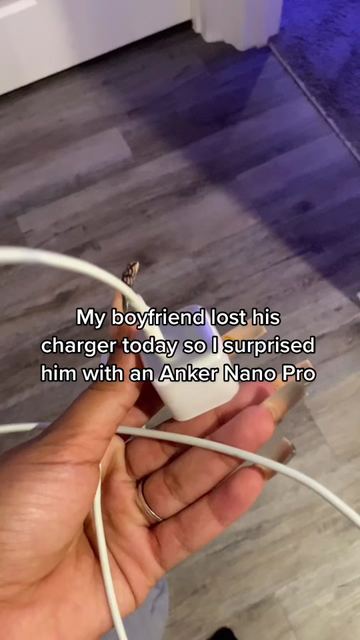
Our nearest published proof for creator programs at scale is the Anker Nano Pro launch: 100 TikTok creators cast and managed in six weeks, with 8.4 million views and 4.9% engagement on the posts still live.
Do you need an agency at all, or a platform?
Many brands reading this need a platform rather than an agency, and the dividing line is whether you have someone in house to do the work an agency would do. Platforms sell discovery, outreach, contracting and reporting as software; agencies sell the judgement and the hours.
The cost comparison is not close at small scale. Influencer platform subscriptions are published, mostly in the hundreds to low thousands per month, and the figures are collected in our piece on what influencer marketing platforms cost. Against a $50,000 agency minimum, a platform plus a part-time campaign manager is the cheaper path for a brand running a few campaigns a year.
The case for the agency is strongest when casting judgement, negotiation and the paid media layer matter more than tooling. Software can tell you an account’s engagement rate; it cannot tell you which three of 40 creators will make something people watch, and it will not argue a rate down for you.
Our full comparison of the three routes, including the in-house option, is in do you need an influencer marketing agency, a platform, or an in-house hire.
What should you ask before you sign with any of them?
Before you sign, ask who writes the brief and what data they see when they write it. A brief written by someone who has never opened your ad account is a guess, however good the creator roster behind it.
Ask whether the fee includes creator payments or sits on top of them, and get the answer in writing. This single ambiguity accounts for most of the gap between quotes that look comparable.
Ask what rights you hold at the end of the campaign, for how long, and whether that includes paid usage and raw files. Then ask what happens to a creator video that underperforms in week one, and who decides.
Finally, ask for two references in your category and the declared minimum in writing. A firm that will not confirm the floor it publishes on a directory profile has told you something useful before the first invoice.
Three answers are worth listening to closely. Ask how the agency decides a campaign has failed, because a firm with no kill criteria will report every campaign as a success.
Ask who owns the creator contracts when the engagement ends, since a roster you cannot rebook without the agency is a roster you are renting.
And ask what the agency does when a creator does not deliver, because the replacement process, not the casting deck, is what you are buying on a program of any size.
Then compare the answers against the criteria at the top of this page rather than against each other. Two agencies can both answer well and still be wrong for you, and the firm that sounds most confident about results it cannot control is usually the one to be most careful with.
The short version
No agency is best, and the lists that say otherwise, this one included, are published by interested parties. Sort the category by the smallest engagement each firm takes.
Per each firm’s own Clutch profile, that is $25,000+ at The Influencer Marketing Factory, $50,000+ at Ubiquitous, The Goat Agency and inBeat, $75,000+ at HireInfluence, $100,000+ at NeoReach and The Outloud Group, and $250,000+ at Viral Nation, with The Influencer Marketing Factory and HireInfluence read 13 November 2026 and the rest 30 October 2026.
Then sort by what you actually need. Creator sourcing and campaign management is one purchase. Creator work with the paid media run by the same team is another, and it is the one that turns a single breakout post into a channel rather than a reporting line.
If your creator budget is under the floors above, do not force it. A platform plus a part-time manager covers discovery, contracting and reporting for a fraction of an agency minimum, and the published subscription prices make that comparison easy to run before you book a single call.
Frequently asked
How much does an influencer marketing agency cost in 2026?
None publishes a rate card, so the only verifiable figure is the minimum project size each declares on its Clutch profile. Per those profiles, it is $25,000+ for The Influencer Marketing Factory, $50,000+ for The Goat Agency, Ubiquitous and inBeat, $75,000+ for HireInfluence, $100,000+ for NeoReach and The Outloud Group, and $250,000+ for Viral Nation.
That is the smallest engagement a firm says it will take, not a monthly fee, and creator payments sit outside it.
Which influencer marketing agency is best for a small brand?
Probably none on the published lists, because per their own Clutch profiles the minimums they declare start at $25,000 and most start at $50,000. A brand spending less than that is usually better served by a platform, a freelance campaign manager, or a smaller agency that does not appear in directory rankings.
What is the difference between an influencer marketing agency and a UGC agency?
An influencer marketing agency buys access to someone else's audience: the creator posts to their own followers and you pay for that distribution. A UGC agency buys content: creators film for your brand and the footage runs as ads from your account.
Several firms do both, and the distinction matters most when you are comparing quotes, because one is priced on reach and the other on assets.
Which influencer marketing agency is best for a D2C brand?
Sort on the declared floor first and on paid usage rights second. The lowest minimum among the named firms is $25,000+ at The Influencer Marketing Factory, per its Clutch profile read 13 November 2026, with $50,000+ at three more.
Below that, a platform plus a part-time campaign manager is the better buy. Then settle paid usage at contract stage, because creator content you cannot run as ads is an awareness spend.
Are agency ranking lists for influencer marketing reliable?
Treat them as marketing material unless they show their criteria and their sources. Most lists ranking for this query are published by agencies or by directories that sell placement, including this page, which is published by an agency that appears on it.
The parts worth reading are verifiable: who owns the firm, when it was founded, its declared minimum, and which categories it works in.
Should you hire a global agency or a specialist?
Hire the global network when the campaign spans many markets at once and coordination is the hard part. Hire a specialist when the creative decision is the hard part, which is most of the time for a single-market consumer brand.
Scale solves logistics, and most campaigns fail on casting and briefing instead.
How often should a comparison like this be rechecked?
Quarterly, and every claim here carries the date it was read. Agency ownership, minimums and positioning move faster than list pages do: The Goat Agency was independent until WPP acquired it in March 2023, and directory fields change whenever a firm edits its own profile.
Treat any undated agency comparison as unreliable.
 Affiliate Marketing vs UGC: Which Should a Consumer Brand Spend On?
 Should You Hire an App Growth Consultant, an Agency, or Do It In-House?
 How Much Should You Budget to Market an App Launch?